Kenya's Food Systems
Stakeholder Landscape
A live, data-driven directory and diagnostics platform mapping civil society networks, organic farmer organizations, and regulatory actors shaping food safety, consumer rights, and sustainable food governance in Kenya.
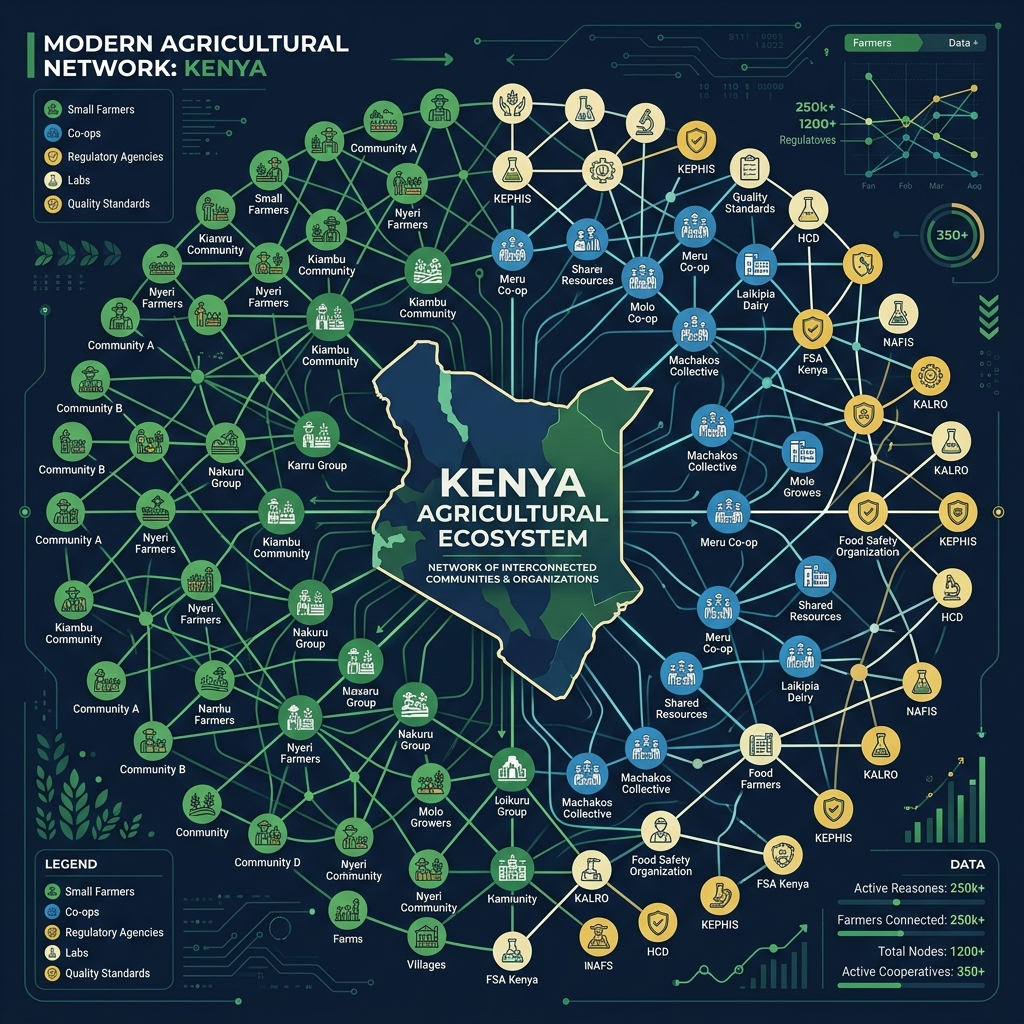
Interactive Directory
Filter and discover verified grassroots organizations open to collaboration by theme, counties, and scope.
Policy & Research
Access shared organizational briefs and track active national or county food bills in real-time.
Consumer Complaints
Submit complaints on safety, false labeling, or pricing to fuel evidence-backed advocacy campaigns.
Matchmaker Engine
Input your thematic interest area and scope to automatically discover partner organizations.
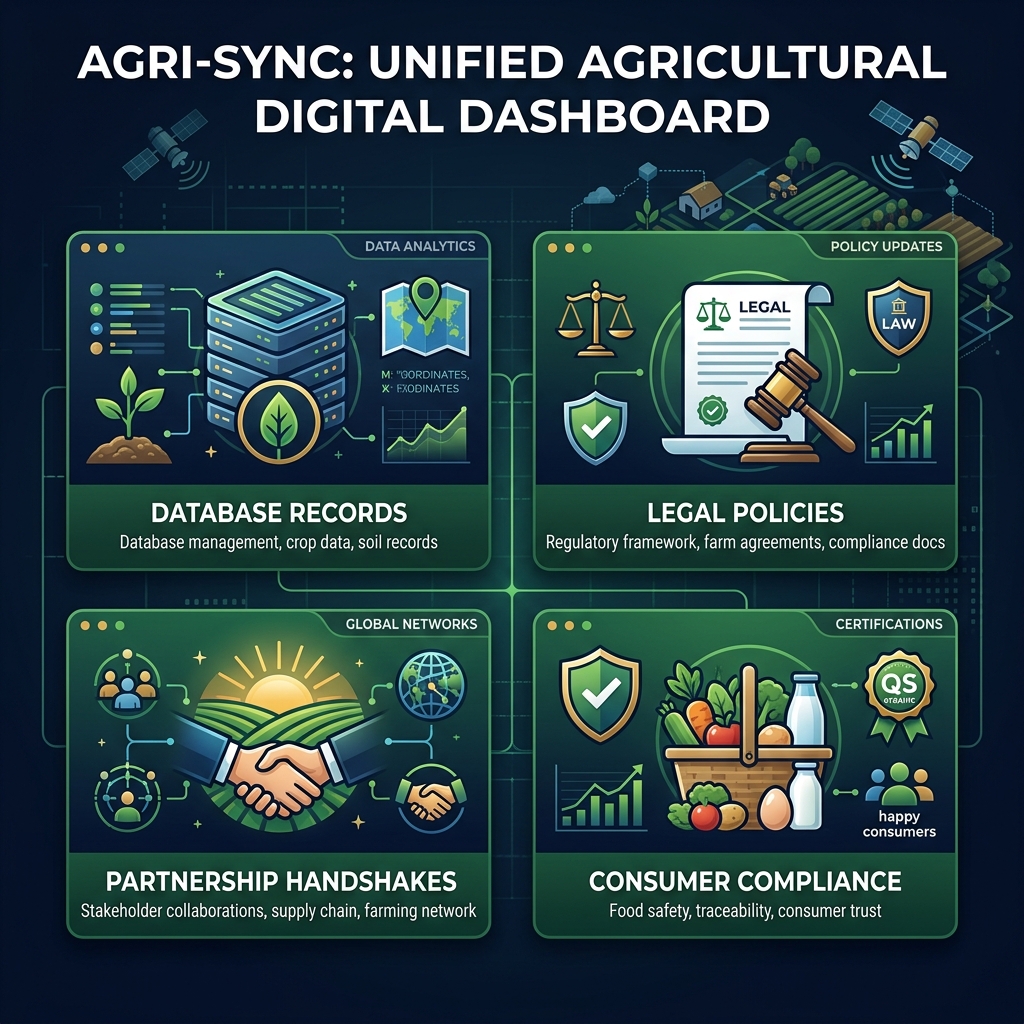 CGA Stakeholder Ecosystem Architecture
Bridging Coordination Deficits in Kenya's Agricultural Sector
The Consumer Grassroots Association (CGA) Kenya Stakeholder Platform represents a major leap forward in synchronizing food systems governance across the country. Historically, Kenyan civil society has operated in silos, resulting in duplicate efforts, fragmented research, and uncoordinated policy lobbying. By mapping verified actors across county borders, tracking active regulatory developments, and establishing direct channels for consumer complaints, this initiative builds a unified evidence-backed advocacy network.
Through deep structural insights, stakeholder matchmaking, and public directory visibility, we empower grassroots actors to collaborate, share publications, and lobby effectively for safety, biosafety, and consumer rights. This living intelligence tool is designed not just as a static directory, but as a dynamic engine to drive long-term structural alignment and capacity building across all 47 counties.
Stakeholder Demographics Overview
Visualizing the structural composition, maturity scales, and leadership dynamics within our active database.
Organizational Maturity
The coexistence of newly emerged groups alongside long-standing anchor institutions signals a healthy generational renewal of Kenya's food advocacy space.
Leadership & Team Composition
We actively track leadership indices to help donors and networks identify and support youth-led and women-led grassroots units.
Highlighted Organizations
Discover some of the mapped organizations making significant impacts in food systems governance, nutrition, and organic agriculture.
A verified grassroots organization operating in Kenya's food sector, coordinating advocacy campaigns, promoting organic agroecological standards, and safeguarding consumer rights.
A verified grassroots organization operating in Kenya's food sector, coordinating advocacy campaigns, promoting organic agroecological standards, and safeguarding consumer rights.
A verified grassroots organization operating in Kenya's food sector, coordinating advocacy campaigns, promoting organic agroecological standards, and safeguarding consumer rights.
8 Major Interview Themes
Key findings and strategic issues identified through qualitative frontline stakeholder dialogues.
Governance & Regulatory Fragmentation
Every respondent cited fragmentation of safety oversight across KEBS, Ministry of Health, AFA, Counties, and KECOPAC. Substandard actors exploit the cracks.
The Funding Trap
100% of respondents named funding as a constraint. Competitive short-term grants create activity gaps and prevent long-term grassroots planning.
Agroecology vs. Industrial
The contest between agroecological food sovereignty and agrochemical-dependent farming. The Nov. 2024 Agroecology Strategy needs urgent rollout.
Gender & Youth Exclusion
Women-led and youth-led groups face structural exclusion from donor networks. PELUM's 3Rs (Rights, Resources, Representation) captures this.
Biosafety & Toxic Inputs
Over 32% of pesticide active ingredients registered in Kenya are banned in the EU. 2022 GMO moratorium lift has deepened safety concerns.
Digital Food Markets
Rapid e-commerce food sales growth is an emerging risk due to unverified online sellers, absent labeling standards, and lack of consumer recourse.
Climate Change Stress
Climate shocks disrupt supply chains and push consumers toward cheaper, less safe food. Agroecology offers the primary resilient response.
Coordination Deficit
Structured coordination mechanisms are absent, leading to duplication. Mapped stakeholders strongly endorse a unified database directory.
Known Collaboration Clusters
Ecosystem coalitions showing documented joint advocacy campaigns and strategic projects.
🌾 Agroecology & Biosafety Coalition
Documented joint work on toxic pesticide lobby petitioning and the National Agroecology Strategy county rollout.
🏛 Consumer Rights & Regulatory Coalition
Anchored by COFEK as KECOPAC founding chair — coordinating consumer surveillance across watchdog units.
📈 Food Loss & Waste Reduction Network
Led by RETRAK with international research partners — produced National Post-Harvest Loss Action Guidelines.
🌿 Youth & Grassroots Food Justice Network
Emerging coalition of newer, youth-led agroecology units — connected via grassroots capacity exchanges.
Public Incident Reporting
Consumer protection is a collective effort. CGA Kenya operates as a regulatory watchdog, coordinating with government compliance agencies.
By submitting observed food safety violations, toxic pesticide usage, or mislabeled packages here, you feed critical grassroots evidence to the coordination networks holding authorities accountable.
 CGA Consumer Protection Division
Join the Stakeholder Newsletter
Receive monthly updates on newly mapped organizations, pending food sector bills, regulatory notices, and funding opportunities in Kenya.